Home / Articles
Combining Cheekbone & Jaw Surgery: The Golden Ratio Approach
Home / Articles
Combining Cheekbone & Jaw Surgery: The Golden Ratio Approach
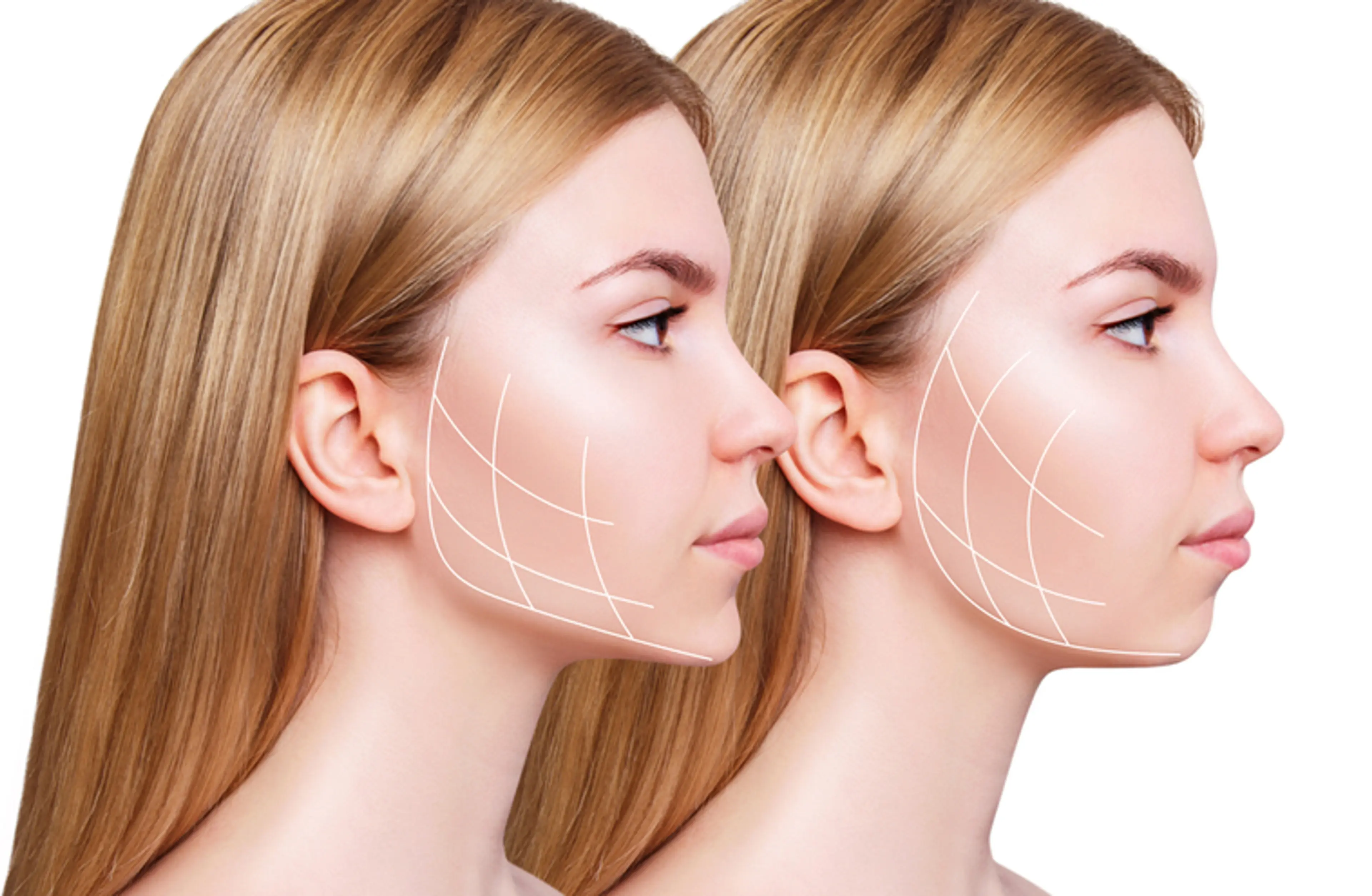
When most people consider plastic surgery, their attention is drawn to one particular feature — perhaps a sharper jawline, slimmer cheeks, or a more defined chin. Yet in reality, facial aesthetics are never determined by one structure alone. The human eye perceives beauty through balance. A strong jawline without harmonious cheekbones may create a heavy appearance, while refined cheekbones paired with a broad lower face can seem disproportionate.
In facial aesthetics, the Golden Ratio provides a helpful framework for proportion. Ideally:
The width of the cheekbones should balance the forehead and jaw.
The lower face (from nose to chin) should be about 1.618 times the height of the midface (from eyes to nose).
The angles of the jaw should taper smoothly, guiding the eye toward the chin.
Of course, the Golden Ratio is not a rigid formula. Every face is unique, and cultural perceptions of beauty vary. For example, in Korea, a softer, slimmer “V-line” jaw is often desired, while in Western aesthetics, a stronger jawline can symbolize attractiveness and confidence. At Face Plus, we use the Golden Ratio not as a strict measurement but as a guiding principle — adjusting each face to achieve balance while respecting individuality and cultural ideals.
Many patients initially request either cheekbone reduction or jawline contouring, not realizing how interdependent these structures are. Performing both surgeries together often yields the most natural and satisfying results.
Reducing only the jaw without addressing wide cheekbones may leave the midface looking broad and heavy. Conversely, narrowing only the cheekbones can accentuate the width of the lower jaw, creating imbalance. By combining the two, we sculpt the face into a naturally tapered, harmonious form.
One of the greatest concerns patients have is looking “operated on.” When procedures are planned in isolation, it’s easier to end up with results that appear unnatural. Comprehensive planning ensures the entire face looks harmonious — softening harsh angles, balancing width, and maintaining natural curves.
Undergoing two procedures separately means two rounds of anesthesia, two healing periods, and longer disruption to daily life. Combining surgeries allows for one recovery process, which is often more convenient and psychologically reassuring.
The face is central to how we interact with others. A proportionate, balanced face not only enhances beauty but also softens expressions, projects vitality, and improves overall self-confidence in both social and professional environments.
Before any surgery, we conduct an in-depth consultation using advanced imaging and 3D facial analysis. This allows patients to visualize potential outcomes and ensures the surgical plan addresses the entire facial structure, not just one feature. We discuss goals, review cultural influences, and consider lifestyle factors to align the plan with each individual’s vision of beauty.
The cheekbones, or zygomatic bones, often determine how wide the face appears. Some patients feel their cheeks project too far forward or widen excessively toward the sides. During zygoma reduction, we carefully reposition and contour the bones to bring them into better proportion with the forehead and jawline. This softens the overall facial width and creates smoother transitions.
The lower jaw plays a critical role in defining facial shape. In cases where the jaw appears overly square or wide, we refine the angle of the mandible and, if necessary, reshape the chin. The goal is not only slimming but also creating smooth, continuous lines from the ear to the chin — the hallmark of the elegant “V-line” shape.
This is where artistry comes into play. Using the Golden Ratio as a guide, we fine-tune the relationship between the cheekbones, jawline, and chin. Adjustments are always customized: a masculine jawline may be left slightly stronger, while a feminine contour is often tapered and delicate. Ethnicity, personality, and patient preference all inform the final design.
Many patients worry about recovery when combining surgeries. At Face Plus, we use advanced surgical techniques that minimize trauma and swelling, making recovery smoother than expected.
We complement surgery with aftercare therapies — including lymphatic drainage massage, laser treatments for skin tightening, and Ultherapy — to accelerate healing and optimize results.
In South Korea, facial contouring surgery has become one of the most sought-after cosmetic procedures. A slimmer, oval-shaped face is considered youthful and elegant, contrasting with the broader, angular jawlines that some patients feel make them look older or more severe.
Choosing the right clinic is crucial when considering facial contouring. At Face Plus, we pride ourselves on combining scientific precision with artistic sensibility.
If you often feel your face looks wide, unbalanced, or harsher than you’d like, combined cheekbone and jaw surgery may be an ideal solution. This approach is suitable for patients who:
Desire a slimmer, more proportionate face
Feel that either the cheekbones or jaw appear too prominent in isolation
Want long-lasting, natural results rather than temporary solutions
Prefer to undergo one surgery and recovery period for comprehensive transformation
During consultation, we will evaluate your facial structure, discuss your goals, and explain the safest and most effective approach tailored specifically for you.